I used to think "study with me" content was just aesthetic filler. Like, okay, you're sitting at a pretty desk with rain sounds playing. Cool. How does *watching someone else study* help *me* study?
Then I had a deadline, tried joining a virtual study room out of desperation, and got more done in 90 minutes than I had in the previous three days.
So I went looking for why. Turns out, there's actual science behind it — and it's more interesting than "ambient vibes."
The Body Doubling Effect (It's Not What You Think)
The term sounds clinical, but the concept is straightforward: humans focus better when another person is physically (or virtually) present, even if that person isn't helping, watching, or interacting.
Researchers call this "body doubling" and it's been studied most extensively in people with ADHD — but it works for neurotypical people too. A 2021 review in *Frontiers in Psychiatry* noted that for many people, the social presence of another person activates a kind of accountability circuit in the brain. Not because you're worried about being judged. But because your brain shifts into a more "public performance" mode, which happens to be more focused than "alone at home" mode.
Why strangers work better than friends
This part surprised me. You'd think studying with a friend would be more motivating. But most people find that a room of strangers — or a YouTube "study with me" stream — produces better focus than studying with someone you know.
The reason: with friends, your social brain is partially engaged. You're aware of them. You might chat, check in, feel the pull to interact. With strangers, that pull doesn't exist. You get the accountability signal without the distraction overhead.
The "11,000 people are studying right now" signal
This is why platforms that show a live count of studying users — even just a number in the corner — have a measurable effect on session length. You're not competing with those people. You're just... not alone. And that small shift in perceived social context changes how your brain treats the task.
Study With Me Videos vs Live Virtual Rooms
YouTube study streams have been around for years and they *do* work. But they have a few structural problems that live virtual rooms solve.
The problem with pre-recorded streams
Video is 3 hours long. You start at 9pm. By the end it's almost midnight and you're not entirely sure you were actually focused the whole time. No Pomodoro structure, no stopping points — just music running continuously while your brain slowly drifts toward undefined territory.
And the most important part: when you close the tab, nothing happens. Zero friction. Exit is exit, as easy as never having started.
What live rooms do differently
Live virtual study rooms have a few small but meaningful differences. You *chose* to enter — that act creates a tiny commitment. The people in the room are also live, not a recording. And when you want to leave, your brain registers it as "quitting" rather than "closing a tab."
How to Join a Free Virtual Study Room in 60 Seconds
You don't need an account, a credit card, or a complicated setup.
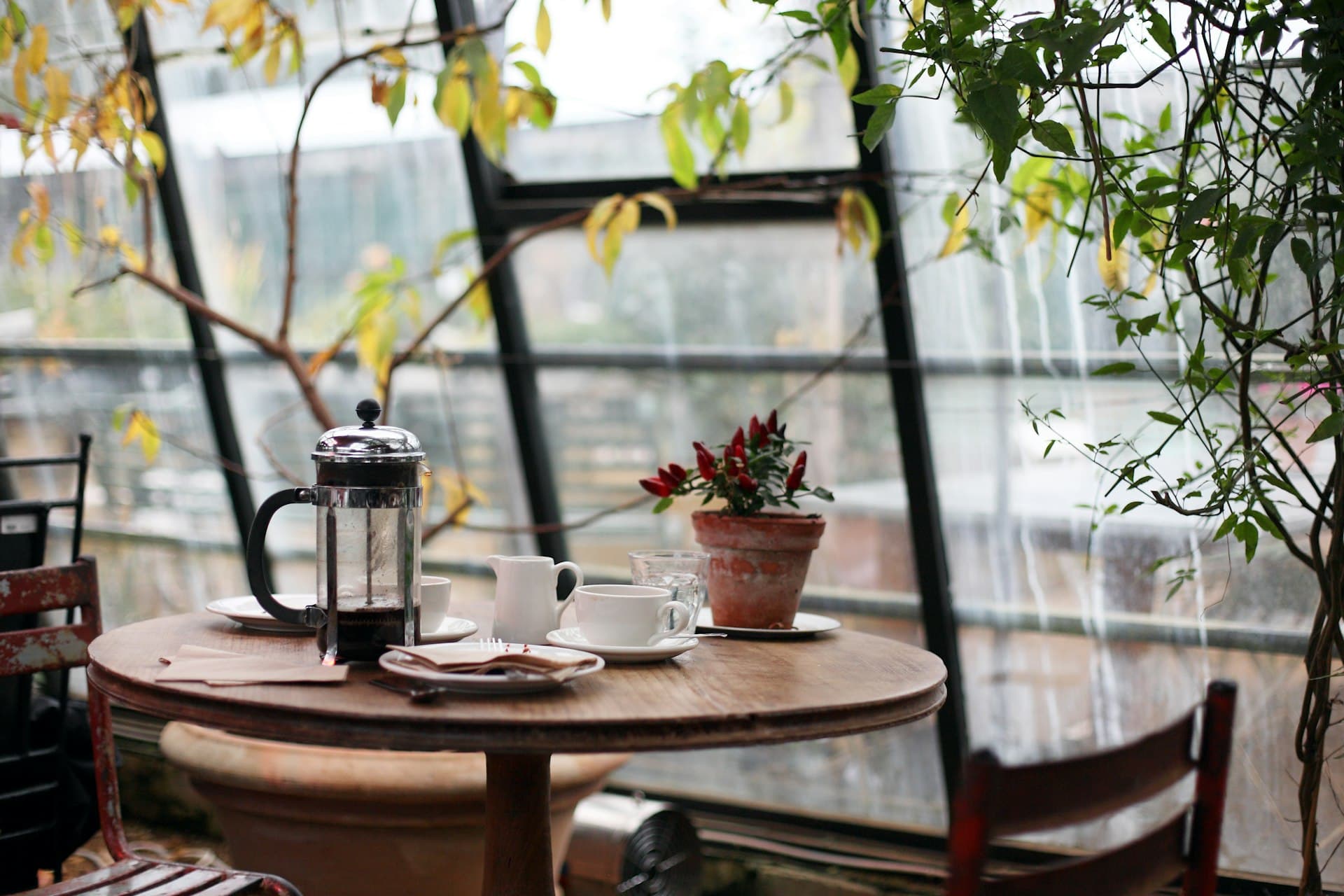
Go to [flowfocus.net](https://www.flowfocus.net). No login needed. Pick a room theme — rainy café, zen library, forest cabin — the Pomodoro timer starts automatically, hit "Join the Collective" to share the space with everyone else studying live. Under 60 seconds. I timed it.
Or: YouTube (if you want video)
Search "study with me" plus your preferred vibe (e.g., "study with me rain café 2 hours pomodoro"). It works. Just set a separate timer if the video doesn't have built-in Pomodoro structure.
Making It Actually Work (Not Just Sitting There)
Before entering the room: set a specific task. Not "study biology" — something like "read through section 3 and write a summary paragraph." Specific enough that your brain has a target.
Use the Pomodoro structure. 25 minutes on, 5 minutes off. Don't try to push through 2 hours straight — you'll drift into a half-awake state that feels productive but isn't.
One thing that often gets skipped: don't spend 15 minutes customizing sounds, switching themes, trying a different room. That's also procrastination — it just looks more productive.
The Honest Limitations
Virtual study rooms don't fix everything, and I don't want to pretend they do.
If you genuinely can't do the work — because you don't understand the material, because you're exhausted, because the task is too vague to know where to start — no amount of rain sounds or timers will save you. The environment lowers friction. It doesn't generate motivation that isn't there.
But on an average day — when the problem is *starting* rather than *can't* — this is one of the simpler ways to get past the inertia. Open the tab, pick a room, start the timer. Your brain will catch up.
Practical Takeaways
To optimize your brain for deep work, consider the following biological hacks:
Work in 90-minute blocks to match ultradian rhythms.
Prioritize 7-9 hours of sleep to clear adenosine buildup.
Maintain steady glucose levels to fuel the high-energy PFC.
Minimize context switching to avoid attention residue.
By understanding the mechanics of our mind, we can move from being victims of distraction to masters of our focus. Deep work isn’t just a productivity habit; it’s a physiological state that we can train and improve over time.